Home » Clinical Supervision for Speech Pathologists Across Australia
Innerlink Therapy provides individual clinical supervision and mentorship for Speech Pathologists across Australia.
Online clinical supervision is available via Zoom, allowing Speech Pathologists in metropolitan, regional, rural and remote locations to access experienced professional support without needing to travel. Face-to-face supervision is also available from our Belmore clinic in Sydney.
Whether you are a new graduate, early-career Speech Pathologist, experienced clinician, sole practitioner, private practice owner or returning to the profession, supervision is tailored to your experience, clinical interests and professional goals.
Our approach is practical, collaborative and reflective, providing a confidential professional space to discuss clinical practice, strengthen reasoning, explore challenges and continue developing confidence and skills.
Enquire About Clinical Supervision
Experienced Clinical Supervision for Speech Pathologists
Clinical supervision provides a structured opportunity to reflect on your work and continue developing professionally throughout your career.
At Innerlink Therapy, supervision is individualised rather than following a one-size-fits-all program.
Sessions may support:
- clinical reasoning and decision-making
- case discussion and clinical problem-solving
- assessment planning
- intervention planning
- reflective practice
- evidence-based practice
- complex client presentations
- professional confidence
- clinical skill development
- communication with clients and families
- multidisciplinary collaboration
- professional boundaries
- managing challenging clinical situations
- identifying professional development goals
- career development
- private practice considerations
- transitioning into a new clinical area
The focus of supervision is guided by your individual needs, professional role and areas of practice.
Online Clinical Supervision Across Australia
You do not need to be located in Sydney to access clinical supervision through Innerlink Therapy.
Individual supervision is available online via Zoom to Speech Pathologists throughout Australia.
Online supervision can be particularly useful for clinicians who:
- live outside major metropolitan areas
- work in regional, rural or remote communities
- have limited access to experienced Speech Pathologists locally
- work as sole practitioners
- work in small practices
- work independently within multidisciplinary organisations
- require external clinical supervision
- want support from a supervisor with experience in a particular clinical area
- need greater flexibility around work and family commitments
Online supervision provides the same opportunity for case discussion, clinical reasoning, reflection and professional development without geographical restrictions.
Enquire About Online Clinical Supervision
Clinical Supervision for New Graduate Speech Pathologists
Starting your career as a Speech Pathologist can be exciting, but it can also bring new clinical, professional and workplace challenges.
Individual clinical supervision provides a dedicated space to ask questions, reflect on experiences and develop greater confidence as you transition from university into professional practice.
Supervision for new graduates may include:
- developing clinical reasoning
- discussing assessment findings
- planning intervention
- prioritising therapy goals
- reviewing complex cases
- navigating unfamiliar clinical presentations
- developing professional communication
- working collaboratively with families
- multidisciplinary practice
- building confidence in decision-making
- identifying when further information or support is required
- reflecting on professional experiences
- establishing sustainable professional practices
Speech Pathology Australia currently requires Speech Pathologists transitioning from Provisional to Full Certified Practising Speech Pathologist status to complete a minimum amount of supervision or mentoring with a more experienced Speech Pathologist.
Clinicians should always check Speech Pathology Australia’s current certification requirements to ensure their individual supervision arrangements meet the applicable requirements.
Speech Pathology Australia Professional Support Requirements
Professional support is an important part of ongoing professional practice.
Under Speech Pathology Australia’s current certification requirements, new graduate Speech Pathologists transitioning from Provisional to Full CPSP status are required to complete at least 12 hours of supervision or mentoring with a more experienced Speech Pathologist.
At least 6 of those 12 hours must currently be completed through individual 1:1 interactions.
Speech Pathology Australia also includes ongoing professional support requirements for Certified Practising Speech Pathologists.
Requirements can change over time, so Speech Pathologists should refer directly to Speech Pathology Australia for the most current certification and professional support requirements.
View Speech Pathology Australia’s Current Professional Support Requirements
Clinical Supervision for Early-Career Speech Pathologists
The first few years of professional practice often involve rapid learning.
As your caseload develops, you may encounter clinical presentations, family situations or professional decisions that are very different from those experienced during university placements.
Clinical supervision can provide an opportunity to explore these experiences with an experienced Speech Pathologist.
Supervision may help early-career clinicians:
- consolidate clinical knowledge
- strengthen clinical reasoning
- explore different intervention approaches
- reflect on outcomes
- develop confidence with more complex presentations
- recognise the limits of their own knowledge
- identify appropriate professional development
- build greater independence in clinical decision-making
Supervision is adapted as your experience and professional needs change.
Clinical Supervision for Experienced Speech Pathologists
Clinical supervision is not only for new graduates.
Experienced Speech Pathologists may also benefit from an independent professional space to reflect on complex cases, explore new clinical areas and discuss professional challenges.
Supervision for experienced clinicians may focus on:
- complex clinical presentations
- advanced clinical reasoning
- changing areas of practice
- multidisciplinary cases
- professional leadership
- difficult clinical decisions
- reflective practice
- clinical governance
- supervising other clinicians
- career development
- private practice
- maintaining sustainable professional boundaries
Experienced clinicians often bring highly specific questions to supervision. Sessions can therefore be structured around the areas where professional reflection and external perspective would be most valuable.
Clinical Supervision for Sole Practitioners and Private Practice Speech Pathologists
Working independently can provide professional freedom, but it can also mean fewer opportunities for informal clinical discussion with colleagues.
External clinical supervision can provide sole practitioners and private practice Speech Pathologists with a dedicated professional space to discuss clinical reasoning, challenging cases and broader professional issues.
Topics may include:
- complex cases
- clinical decision-making
- professional boundaries
- caseload management
- documentation
- multidisciplinary communication
- service delivery
- managing professional isolation
- identifying professional development priorities
- balancing clinical and practice responsibilities
Supervision remains focused on clinical and professional development and is tailored to the individual Speech Pathologist’s needs.
Clinical Supervision for Rural and Remote Speech Pathologists
Speech Pathologists working in rural and remote communities can face unique professional challenges.
Clinicians may work across broad clinical areas, have limited access to specialist colleagues or be the only Speech Pathologist within their organisation or community.
Online clinical supervision allows rural and remote Speech Pathologists to access experienced professional support regardless of location.
Sessions may provide opportunities to:
- discuss unfamiliar clinical presentations
- strengthen clinical reasoning
- explore complex cases
- reflect on working across broad scopes of practice
- identify appropriate resources
- discuss professional boundaries
- consider referral or collaboration options
- reduce professional isolation
- support ongoing professional development
Innerlink Therapy welcomes clinical supervision enquiries from Speech Pathologists throughout regional, rural and remote Australia.
1:1 Clinical Supervision
Innerlink Therapy primarily provides individual 1:1 supervision.
Individual supervision allows sessions to focus specifically on your clinical work, professional goals and areas requiring reflection.
You can bring questions, cases or professional issues to each appointment.
Depending on your needs, sessions may involve:
- discussing a particular client presentation
- exploring clinical reasoning
- reviewing assessment options
- considering intervention approaches
- reflecting on a difficult situation
- reviewing professional development goals
- discussing changes in your area of practice
- exploring areas where you would like to build confidence
The purpose is not simply to tell you what to do.
Effective supervision provides an opportunity to think critically, consider different perspectives and strengthen your own clinical reasoning and professional judgement.
Clinical Supervision and Mentoring
Clinical supervision and mentoring are both forms of professional support, although the focus of each relationship may differ depending on the clinician’s needs.
Clinical supervision commonly provides a structured space to reflect on clinical practice, decision-making, professional responsibilities and client-related challenges.
Mentoring may have a broader developmental focus and can include professional growth, career direction, leadership and learning from the experience of another clinician.
In practice, individual professional support may include elements of both supervision and mentoring.
At the beginning of the professional relationship, we can discuss your goals and determine the most appropriate focus for your sessions.
What Can I Discuss During Clinical Supervision?
Clinical supervision can cover a wide range of professional and clinical topics.
You may choose to discuss:
- assessment
- diagnosis and differential considerations
- intervention planning
- therapy goals
- complex communication needs
- AAC
- speech and language development
- developmental language difficulties
- autism
- developmental delay
- feeding
- swallowing and dysphagia
- orofacial myology
- bilingual and multilingual communication
- working with families
- interdisciplinary practice
- professional communication
- clinical documentation
- professional boundaries
- ethical considerations
- challenging clinical situations
- career development
- professional confidence
Supervision remains within the supervisor’s professional experience and scope of practice. Where another professional or specialist opinion would be more appropriate, this can be discussed during supervision.
AAC and Complex Communication Clinical Supervision
Speech Pathologists working with people who have complex communication needs can encounter clinical questions involving assessment, communication partner support, AAC implementation and ongoing intervention.
Clinical supervision may provide an opportunity to discuss:
- complex communication needs
- AAC assessment considerations
- AAC implementation
- aided language modelling
- communication partner training
- developing meaningful communication opportunities
- working with families and support workers
- multidisciplinary collaboration
- functional communication goals
- participation and independence
The focus remains on strengthening the clinician’s own reasoning and decision-making rather than providing a substitute for direct assessment of a client.
Dysphagia, Feeding and Swallowing Supervision
Speech Pathologists working in feeding and swallowing may seek supervision to reflect on clinical reasoning, professional responsibilities and complex presentations.
Depending on the clinician’s experience and the matter being discussed, supervision may include reflection on:
- assessment considerations
- clinical reasoning
- risk considerations
- documentation
- communication with clients and families
- multidisciplinary collaboration
- professional scope
- referral decisions
- professional development needs
Supervision does not replace any training, competency requirements or workplace clinical governance required to practise within a particular area.
How Does Online Clinical Supervision Work?
Online supervision is conducted through Zoom.
Before Your First Session
We will discuss your professional background, current role, areas of practice and what you would like to achieve through supervision.
You may have particular clinical areas you want to develop or simply want regular access to an experienced Speech Pathologist for professional reflection.
During Supervision
Sessions are collaborative and guided by your needs.
You may bring cases, questions, professional challenges or areas for reflection.
The discussion may include clinical reasoning, consideration of different approaches, professional reflection and identification of further learning or actions.
Ongoing Supervision
Some Speech Pathologists attend supervision regularly, while others arrange appointments when they need support with a specific issue or period of professional development.
The frequency can be discussed based on your experience, goals and professional circumstances.
Meet Evett Lattouf – Clinical Supervisor
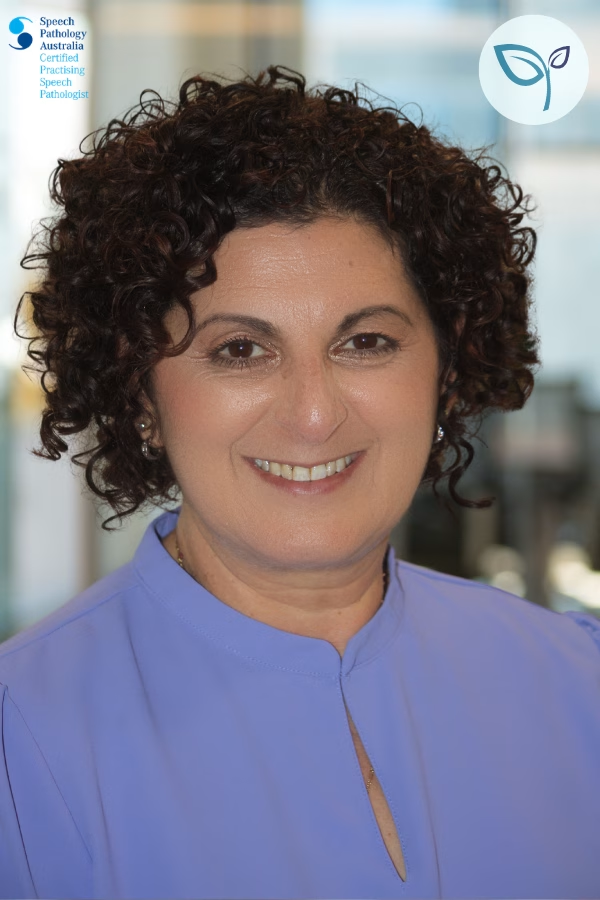
Evett Lattouf is the Clinical Director of Innerlink Therapy and a Certified Practising Speech Pathologist with more than 30 years of experience across public and private healthcare settings.
Throughout her career, Evett has worked across a broad range of Speech Pathology areas and client populations.
Evett’s approach to supervision is collaborative, practical and reflective.
Rather than providing a formula for every clinical situation, supervision supports Speech Pathologists to explore the information available, strengthen their reasoning and develop greater confidence in their own professional decision-making.
Her extensive experience across public and private practice allows her to support clinicians at different stages of their careers and with a wide range of professional questions.
Evett’s clinical experience includes:
- speech and language
- bilingual and multilingual language development
- autism
- developmental delay
- feeding
- swallowing and dysphagia
- orofacial myology
- Augmentative and Alternative Communication (AAC)
- complex communication needs
- working with children and adults
- multidisciplinary practice
- private practice
Who Can Access Clinical Supervision?
Clinical supervision through Innerlink Therapy may be suitable for:
- new graduate Speech Pathologists
- Provisional CPSPs
- early-career Speech Pathologists
- experienced Speech Pathologists
- sole practitioners
- private practice Speech Pathologists
- clinicians returning to professional practice
- Speech Pathologists changing clinical areas
- rural and remote Speech Pathologists
- clinicians seeking external professional support
If you are unsure whether the supervision available through Innerlink Therapy matches your professional needs, contact our team to discuss what you are looking for.
Face-to-Face Clinical Supervision in Sydney
Speech Pathologists who prefer in-person professional support can access face-to-face clinical supervision at Innerlink Therapy’s clinic in Belmore, Sydney.
Our clinic is located within Sydney’s Canterbury-Bankstown area and is accessible to clinicians from surrounding areas of Sydney.
For Speech Pathologists outside Sydney, online supervision is available across Australia.
Enquire About Clinical Supervision
Whether you are starting your career, developing expertise in a new area, working independently or looking for experienced professional support, clinical supervision can provide valuable time for reflection, learning and professional growth.
Innerlink Therapy offers:
- individual 1:1 clinical supervision
- new graduate supervision
- early-career supervision
- experienced clinician supervision
- external supervision for sole practitioners and private practice clinicians
- AAC and complex communication supervision
- online supervision across Australia
- face-to-face supervision in Belmore, Sydney
Contact our team to discuss your professional goals and clinical supervision requirements.
Enquire About Clinical Supervision
Phone: 02 8065 1197
Email: info@innerlinktherapy.com.au
Frequently Asked Questions
Do you provide clinical supervision to Speech Pathologists across Australia? Yes. Innerlink Therapy provides online clinical supervision to Speech Pathologists across Australia via Zoom. You do not need to live in Sydney to access supervision.
Who provides the clinical supervision? Clinical supervision is provided by Evett Lattouf, Clinical Director of Innerlink Therapy and a Certified Practising Speech Pathologist with more than 30 years of experience across public and private healthcare settings.
Do you provide supervision for new graduate Speech Pathologists? Yes. New graduate and early-career Speech Pathologists are welcome to enquire about individual clinical supervision.
Sessions can support clinical reasoning, reflection, professional confidence and the transition into professional practice.
Can clinical supervision contribute to Speech Pathology Australia requirements? Speech Pathology Australia currently requires new graduates transitioning from Provisional to Full CPSP status to complete at least 12 hours of supervision or mentoring from a more experienced Speech Pathologist, with at least 6 hours completed through 1:1 interactions.
Individual clinicians are responsible for confirming that their supervision arrangements meet Speech Pathology Australia’s current requirements.
We recommend checking the current requirements directly with Speech Pathology Australia.
Is clinical supervision only for new graduates? No. Clinical supervision can be valuable throughout a Speech Pathologist’s career.
Innerlink Therapy works with new graduates, early-career clinicians, experienced Speech Pathologists, sole practitioners, private practice clinicians and clinicians returning to practice.
Can I arrange supervision if I work in a rural or remote area? Yes. Online supervision via Zoom is available to Speech Pathologists throughout Australia, including those working in regional, rural and remote communities.
Can I discuss AAC and complex communication during supervision? Yes. Evett has extensive experience in AAC and complex communication. Supervision may include discussion of clinical reasoning, AAC implementation, communication partner support and complex communication cases within the supervisor’s scope of practice.
Can I discuss dysphagia or feeding cases? Yes. Feeding and dysphagia are among Evett’s areas of clinical experience. The focus of supervision will depend on your professional experience, clinical question and scope of practice.
Supervision does not replace competency requirements, specialist training or workplace clinical governance.
How often should I attend clinical supervision? There is no single frequency that suits every clinician.
Some Speech Pathologists benefit from regular monthly or fortnightly supervision, while others arrange sessions when managing complex cases, developing new skills or transitioning into a different role.
Your preferred frequency can be discussed based on your professional needs and any applicable workplace or professional requirements.
Is face-to-face supervision available? Yes. Face-to-face clinical supervision is available from our Belmore clinic in Sydney. Online Zoom supervision is available across Australia.
Is clinical supervision confidential? Clinical supervision provides a professional environment for reflection and discussion.
Clinicians remain responsible for maintaining client confidentiality and should avoid sharing unnecessary identifying information when discussing cases. Any professional, ethical or workplace confidentiality obligations continue to apply.