
Estimated reading time: 3 minutes
Play is an important part of children’s learning, communication and development. Through play, children can explore ideas, practise new skills, interact with other people and learn how language relates to everyday experiences.
Play can take many forms, but it is often enjoyable, engaging, meaningful and interactive. Children may explore, experiment, imitate others and repeat experiences as they learn.
Why is play important?
Play helps children understand their world. It teaches them many skills, including:
- problem-solving
- sequencing
- imitation
- turn-taking
- listening
- expressing ideas
- commenting
- negotiating
- social interaction
- independence.
During play, children also have opportunities to hear new words, practise using language and participate in back-and-forth interactions with other people.
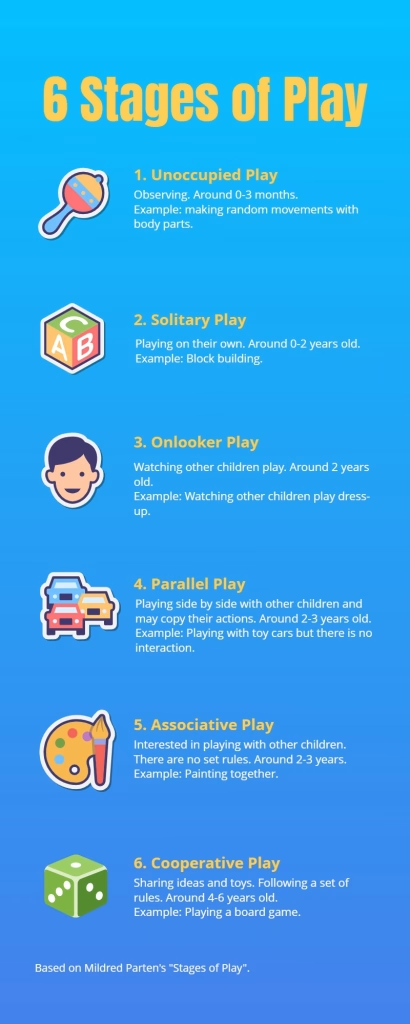
How Can I Use Play to Support Communication?
You can support communication during everyday play by:
- following your child’s interests and joining their play
- commenting on what your child is doing
- reading books and singing songs together
- taking turns during games and activities
- pausing to give your child time to communicate
- adding simple words and sentences to what your child says or does
- creating natural opportunities for your child to request, comment or make choices.
You do not need special toys or structured activities. Everyday play can provide meaningful opportunities to connect, interact and communicate.
Look for regular opportunities to share play and interaction during everyday routines. Even short periods of child-led play can create useful opportunities for communication.
How Can a Speech Pathologist Help?
A Speech Pathologist can assess your child’s communication skills and identify areas where additional support may be helpful.
Where appropriate, therapy may use play-based activities to support receptive and expressive language, vocabulary, social communication, turn-taking and functional communication.
Speech Pathologists can also provide parents and carers with practical strategies for supporting communication during play and everyday routines.
If you have concerns about your child’s language or communication development, learn more about our
Speech Pathology services or Speech & Language Assessments.
Frequently Asked Questions
Does play help children develop language? Yes. Play can create natural opportunities for children to hear and use words, take turns, express ideas and interact with other people.
Do I need special toys to support communication? No. Books, household objects, pretend play, songs and everyday routines can all create opportunities for communication.
When should I speak with a Speech Pathologist? Consider seeking advice if you are concerned about how your child understands language, uses words or sentences, interacts with others or communicates their needs and ideas.