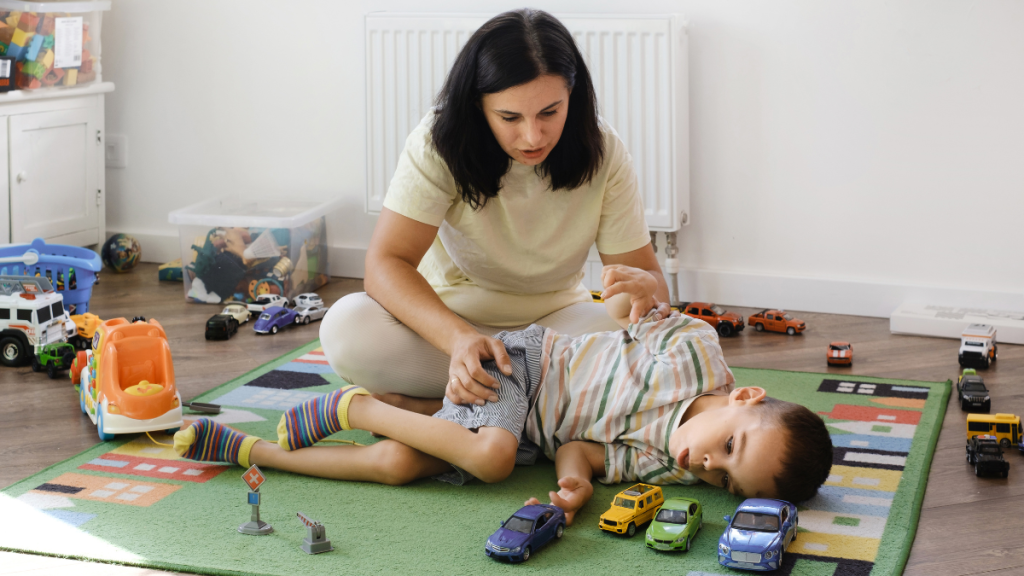
Why is play so important for my child in therapy?

Home » Blog » Early Communication

Estimated reading time: 3 minutes

Play is an important part of children’s learning, communication and development.

Play in speech therapy is purposeful. Speech Pathologists can use play-based activities to help children practise language, communication and social interaction skills in engaging and meaningful ways.

If you have ever wondered, “All my child does in speech therapy is play,” there is often much more happening during the activity than it may first appear.

Read More

How Play Supports Your Child’s Communication

Home » Blog » Early Communication
mother playing with her child

Estimated reading time: 3 minutes

Play is an important part of children’s learning, communication and development. Through play, children can explore ideas, practise new skills, interact with other people and learn how language relates to everyday experiences.

Play can take many forms, but it is often enjoyable, engaging, meaningful and interactive. Children may explore, experiment, imitate others and repeat experiences as they learn.

Read More

Why Waiting Can Help Your Child Communicate

Home » Blog » Early Communication

Estimated reading time: 5 minutes

Waiting can be a simple but powerful communication strategy. By pausing and giving your child time to respond, you create more opportunities for them to initiate, communicate and take an active role in the interaction.

Children communicate in many different ways, including facial expressions, body language, gestures, sounds, words and sentences. Some communication attempts can be subtle, especially for children who use few spoken words or need more time to process what has been said.

When adults slow down and wait, children have more time to notice, process and respond. This can support communication, shared attention and participation in everyday interactions.

Read More