
Estimated reading time: 4 minutes
The first then strategy is a simple way to help children understand instructions, routines and transitions. By presenting two steps clearly, what happens first and what happens next, parents and therapists can reduce the amount of language a child needs to process.
Some children find it difficult to follow instructions, complete routines or understand the sequence of everyday activities. Using “first” and “then” can make expectations clearer and easier to understand.
All children and adolescents seek some form of independence. That means, they want to choose activities or tasks that suit them. As adults, we need them to follow instructions for learning, for safety, and to be a successful part of their community. Some children have difficulties following instructions, routines, or sequencing events.
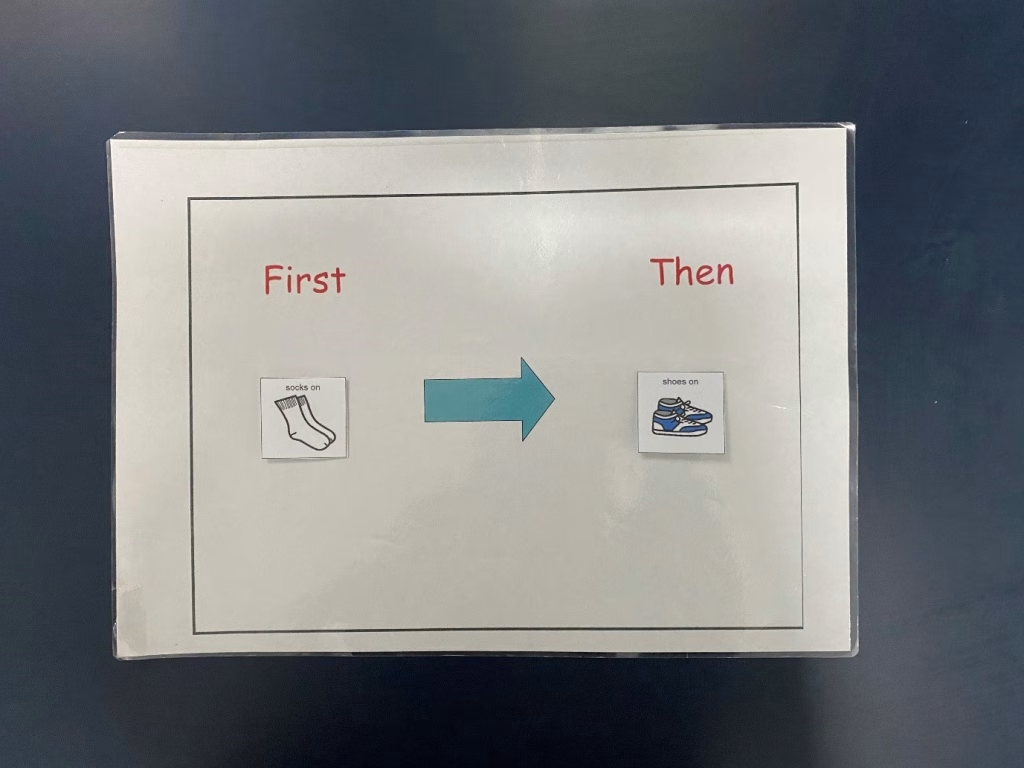
One of the easiest techniques in giving an instruction is by using “First (instruction/activity 1), then (instruction/activity 2).” This is a powerful and clear way to communicate an instruction with your child by providing two clear pieces of information to remember. This makes the instruction easier to understand and the steps more achievable.
What Are the Benefits of the First Then Strategy?
For younger children:
- You can break down steps within an activity. For example, when playing a game, you could say, “First roll the dice, then move your character.”
- Some children benefit from shorter, simpler instructions when completing everyday activities. A first then statement can clearly show what is expected before moving on to a preferred activity. It teaches your child an understanding of your expectation before they receive their motivating activity. For example, “First sit, then Peppa Pig.”
- You can instruct your child to complete two unrelated activities. For example, “First we’ll read a book, then play with Mr Potato Head.”
For older children:
- You can help your child complete a non-preferred activity by pairing it with a preferred activity after. For example, “First finish your homework, then you can have the iPad.”
For adolescents:
- ‘First and then’ can also be used to understand and complete a routine. For example, “First have your breakfast, then you can go out,” or “First make your bed, then you can play on your device.”
For parents:
- This reduces the amount of language you are using to explain the task.
- It helps you clearly communicate your expectations and conveys to your child that their preference for an activity will occur.
How to Use the First Then Strategy
You can use visual symbols, photos or written words to support your child’s understanding. Pair the visual support with spoken language by pointing to each item and saying, for example, “First book, then Mr Potato Head.”
Be consistent and follow through with the sequence you have communicated. If you say, “First book, then iPad,” provide access to the iPad after the agreed activity is completed. Consistency can help your child learn what the first then statement means and what to expect.
How can a Speech Pathologist help?
A Speech Pathologist can assess how your child understands spoken language and follows instructions. They can also provide strategies to make everyday communication clearer, including using first then statements, visual supports and simplified language.
Where appropriate, a Speech Pathologist can develop visual communication supports that are tailored to your child’s routines, communication needs and everyday environments.