Estimated reading time: 5 minutes
Story writing for children can be much easier when they have something meaningful to write about. Real experiences, familiar people, photographs, drawings and imaginative play can all provide ideas that help children organise their thoughts and turn them into a story.
Writing a story involves more than putting sentences on a page. Children need to think about characters, settings and events, organise ideas in a logical sequence and use language that helps the reader understand what happened. These narrative skills also support everyday communication, reading comprehension and the ability to share experiences with other people.
How can I make story writing more engaging for my child?
Children often find story writing easier when they can begin with something they can see, remember or act out.
Try using:
- Real experiences. Talk about a recent outing, family event, school activity or something funny that happened. Help your child identify what happened first, next and last.
- Photographs. Use a small group of photos from an event and arrange them in order before writing about what happened.
- Drawings or comics. Ask your child to draw the main parts of the story first, then add words or sentences underneath each picture.
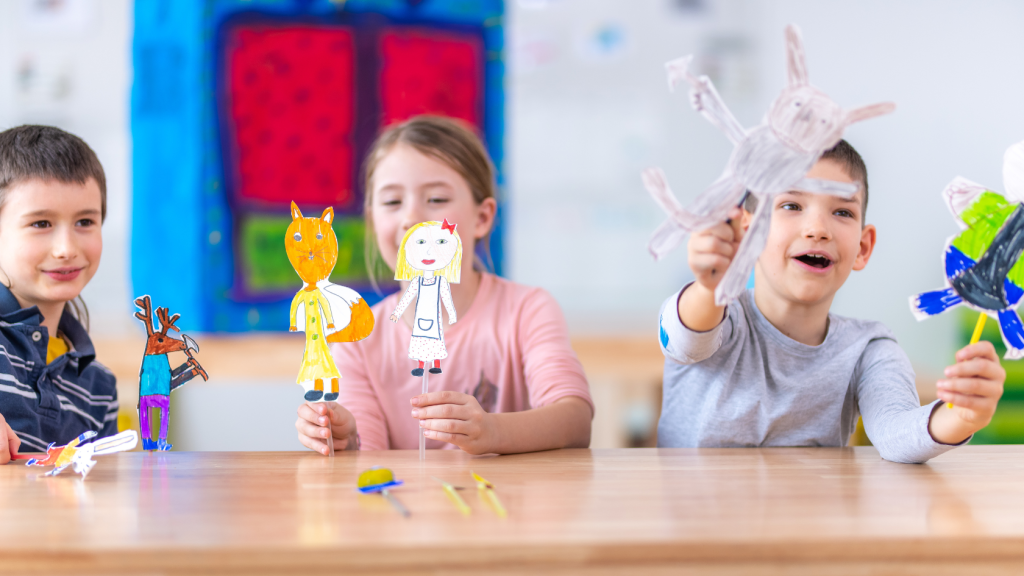
- Puppets or toys. Act out a simple problem and solution using favourite characters before turning the interaction into a written story.
- Dress-ups and imaginative play. Acting out a story can help children develop ideas about characters, settings, actions and dialogue.
- Story starters. Begin with a simple prompt such as “One day, something unexpected happened…” and build the story together.
The goal is to reduce the pressure of starting with a blank page. Once a child has ideas to work with, it can be easier to organise those ideas into a beginning, middle and end.
Tip: If your child gets stuck, focus on helping them generate and organise ideas before worrying about spelling or punctuation.
What narrative skills do children use when writing stories?
Narrative skills help children organise and communicate events in a way that makes sense to another person. These skills are used not only in story writing, but also when children retell something that happened, explain an experience or answer questions about a story.
Important narrative skills can include:
- identifying the main characters
- describing where and when the story takes place
- explaining what happened first, next and last
- identifying a problem or important event
- describing how characters respond
- explaining how the problem is resolved
- using enough detail for the listener or reader to understand the story
Parents and carers can support these skills by asking simple questions such as:
- “Who is in the story?”
- “Where are they?”
- “What happened first?”
- “What happened next?”
- “Was there a problem?”
- “How did they fix it?”
- “How did the story end?”
These questions can help children organise their ideas before they start writing.
How can Speech Pathology support story writing and narrative skills?
Some children may find it difficult to organise ideas, retell events, understand story structure or use enough language to make a story clear to another person.
A Speech Pathologist can help assess the language skills involved in storytelling and support children to develop stronger narrative skills. Therapy may focus on areas such as sequencing events, using more detailed vocabulary, building sentences, understanding story structure and explaining ideas clearly.
Support can also include helping children move from spoken storytelling to written stories, particularly when organising ideas or expressing them in writing is difficult.
At Innerlink Therapy, our Speech Pathologists work with children and families to support communication, language and literacy skills that are meaningful for everyday learning and participation.
If your child is finding storytelling, written expression or organising ideas difficult, contact Innerlink Therapy to discuss whether Speech Pathology may be appropriate.
Frequently Asked Questions
Why does my child find story writing difficult? Story writing requires several skills at the same time, including generating ideas, organising events, building sentences, choosing vocabulary and remembering story structure. Some children may understand a story well but still find it difficult to organise their ideas in writing.
How can I help my child start a story? Begin with something familiar, such as a recent experience, photograph, drawing, toy or simple story prompt. Talking through the ideas first can make it easier for your child to decide what to write.
What is narrative language? Narrative language is the language used to tell or retell events in a clear sequence. It includes skills such as describing characters and settings, explaining what happened, identifying a problem and describing how the story ends.
Should I correct spelling while my child is writing a story? It can be helpful to separate idea generation from editing. If your child is struggling to get ideas onto the page, focus first on the story itself. Spelling, punctuation and grammar can be reviewed afterward.
Can telling a story aloud help with writing? Yes. Telling the story aloud first can help children organise their ideas, practise sentence structure and work out the sequence before they begin writing.
When should I consider seeing a Speech Pathologist? You may consider speaking with a Speech Pathologist if your child regularly has difficulty retelling events, organising stories, understanding story structure, using language to explain ideas or expressing those ideas in writing.
Internal Links